
When sweetness was used with control, not excess.
“Medicine is the art of preserving health.”
— Avicenna
SWEETNESS WAS NEVER MEANT TO BE STRONG
In ancient times, sweetness was treated carefully.
It was not added freely to food or drinks.
It was measured, respected, and often reserved for specific uses.
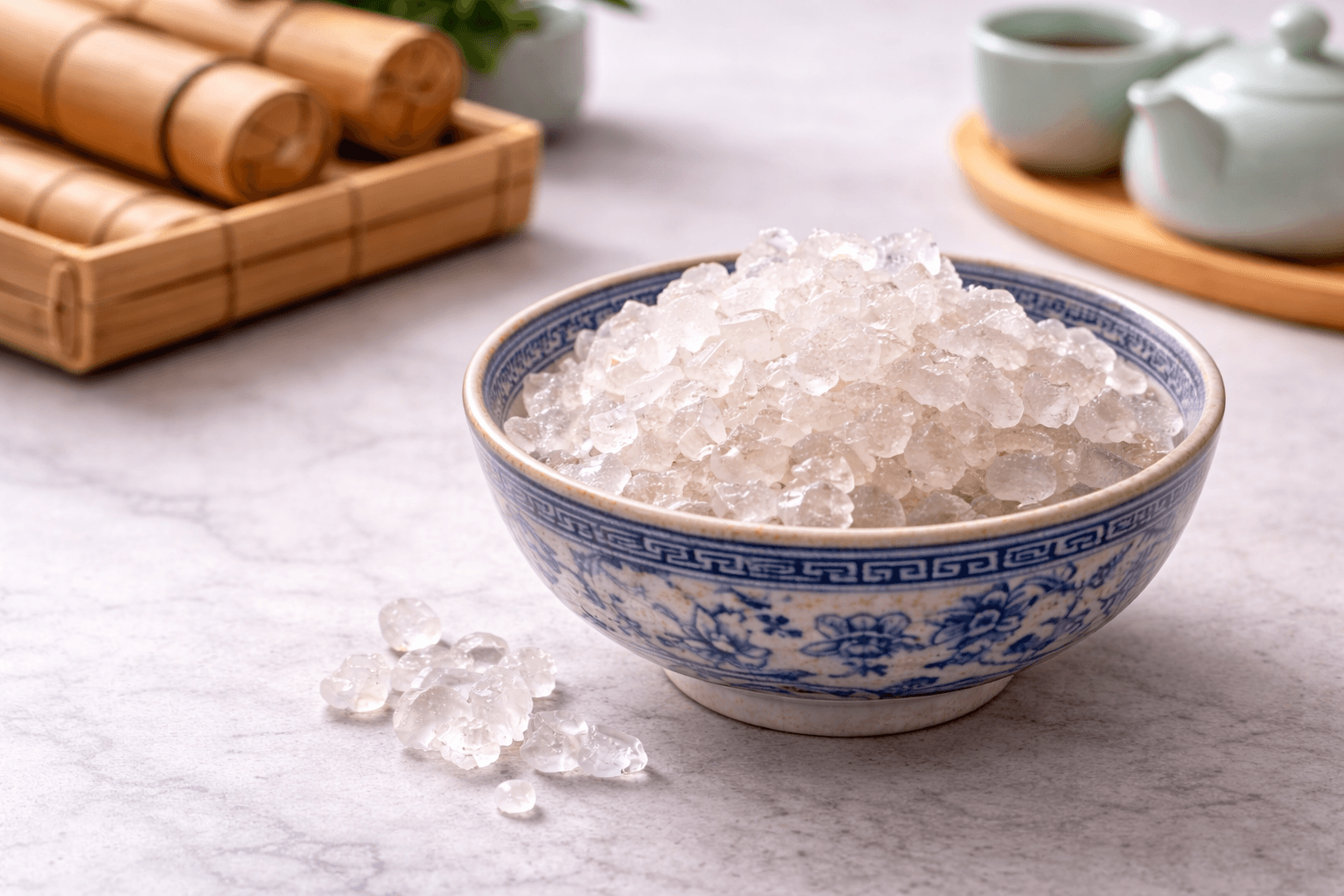
Rock sugar became important because it allowed sweetness without overload.
THE ROLE OF ROCK SUGAR IN IMPERIAL CHINA
In traditional Chinese practices, balance mattered more than taste.
Rock sugar was preferred because:
- it dissolved slowly
- it softened bitterness
- it did not overpower other ingredients
It was commonly added to:
- herbal preparations
- warm drinks
- medicinal decoctions
The goal was not sweetness, but harmony.
WHY AVICENNA CHOSE ROCK SUGAR
Avicenna, one of the most influential physicians of the Islamic Golden Age, paid close attention to how ingredients interacted.
He valued rock sugar because it:
- moderated strong herbs
- made remedies easier to digest
- reduced harsh effects
For him, sweetness was a tool — not a pleasure.
WHAT MADE ROCK SUGAR DIFFERENT
Compared to regular sugar, rock sugar behaved differently.
It:
- released sweetness slowly
- felt gentler on the system
- allowed better control over quantity
This made it suitable for repeated use, especially alongside medicinal ingredients.
A SHARED IDEA ACROSS CULTURES
Imperial China and Avicenna came from different worlds.
Yet they shared one belief:
the body responds better to balance than excess.
Rock sugar fit this belief perfectly.
WHY THIS CHOICE STILL MAKES SENSE
Even today, many people find regular sugar too sharp and overpowering.
Rock sugar offers an alternative:
- milder sweetness
- slower impact
- better control
It supports the body instead of exciting it.
SUMMARY
Rock sugar was not chosen because it was sweet.
It was chosen because it was controlled.
That is why both Imperial Chinese systems and Avicenna trusted it — not as food, but as a supporting ingredient.